
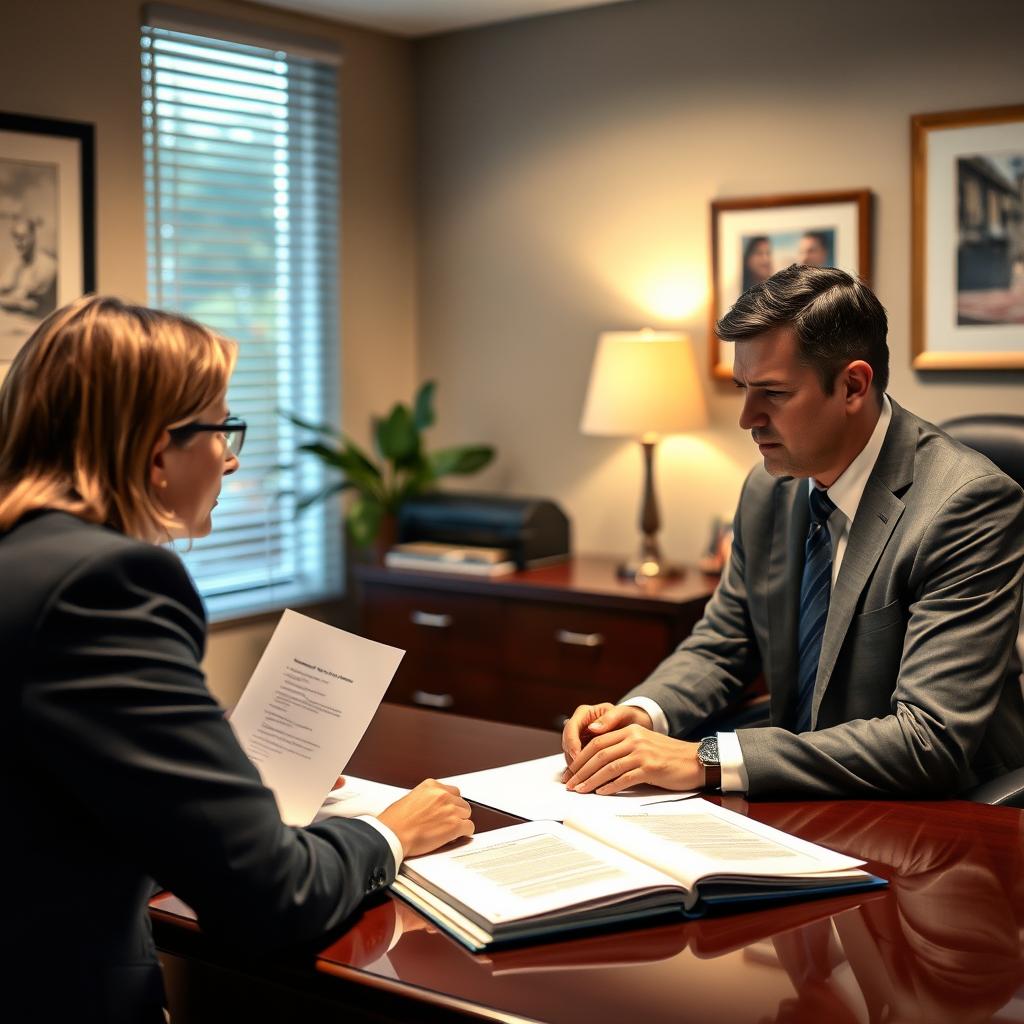
License Revocation Defense Lawyer Falls Church, VA
You open a letter from the Virginia Department of Motor Vehicles and your hands tighten—your driver’s license has been revoked. Suddenly you cannot get to work, pick up your children, or handle a single daily errand. A license revocation in Virginia is not a temporary inconvenience; it is a legal order that can follow a criminal traffic conviction, a DUI, or an accumulation of DMV demerit points, and it can leave you without driving privileges for a substantial period. If you are facing a license revocation in Falls Church, you need counsel who understands how the Virginia DMV and the Falls Church General District Court work together—and who can pursue every available avenue to restore your driving ability. Law Offices Of SRIS, P.C. – Advocacy Without Borders.
Mr. Sris, Owner and Founder of Law Offices Of SRIS, P.C., has concentrated on Virginia traffic matters since 1997. He and his Of Counsel appear regularly at the Falls Church General District Court at 300 Park Avenue, Suite 151W. They know what the judges expect and how the Commonwealth’s Attorney’s office approaches license-related cases. If you are searching for a License Revocation Defense Lawyer in Falls Church, VA, reach Law Offices Of SRIS, P.C. at (888) 437‑7747 to request a consultation.
Understanding License Revocation in Falls Church, Virginia
A license revocation is a complete termination of your driving privilege, ordered by the Virginia DMV under Va. Code § 46.2‑389 and the broader statutory scheme in Title 46.2, Chapter 3. Unlike a simple suspension, which typically ends after a set period, a revocation often requires you to reapply and meet rigorous eligibility requirements after a mandatory waiting period. The DMV can revoke a license after a conviction for specific criminal traffic offenses—such as reckless driving that results in a fatality, DUI, or felony driving on a suspended license—or as part of the habitual offender process.
Under Va. Code § 46.2‑389, a conviction for certain offenses—including voluntary or involuntary manslaughter resulting from the operation of a motor vehicle, perjury concerning motor vehicle laws, or a felony involving a motor vehicle—requires the Virginia DMV Commissioner to revoke the driver’s license.
Source: Va. Code § 46.2‑389. Virginia Legislative Information System
Reviewed by Mr. Sris, admitted in VA/MD/DC/NJ/NY.
Falls Church cases are heard at the Falls Church General District Court, part of the Seventeenth Judicial District. A conviction in that courthouse can trigger an automatic DMV administrative action separate from the criminal penalty. Many drivers learn of a revocation only when a notice arrives weeks after a court appearance. An experienced defense attorney can address both the pending charge and the administrative consequences, often by negotiating a resolution that avoids the underlying conviction that drives the revocation.
The Falls Church City area, served by Route 7, I‑66, and I‑495, sees a high volume of traffic enforcement. Speed enforcement on these corridors frequently results in reckless driving charges—and a reckless driving conviction, a Class 1 misdemeanor, can trigger a license suspension that, if coupled with prior offenses, may escalate to revocation. Our Fairfax Location works with clients throughout Falls Church to build a proactive defense before a revocation notice arrives.
How Mr. Sris and His Of Counsel Handle License Revocation Defense
When a license revocation is at stake, the priority is to stop the administrative action before it takes effect, or to reopen the case when possible. Mr. Sris and his Of Counsel examine the underlying conviction that triggered the revocation. If the conviction was for a criminal traffic offense—such as reckless driving by speed under Va. Code § 46.2‑862, driving on a suspended license under Va. Code § 46.2‑301, or a DUI under Va. Code § 18.2‑266—they evaluate whether there was a procedural error, an evidentiary weakness, or a negotiation opportunity that could have prevented the conviction.
In many revocation cases, the trusted path is to petition the court to set aside the conviction, move for a rehearing, or pursue a restricted license through the DMV’s administrative hearing process. Mr. Sris and his Of Counsel prepare a factual record that demonstrates the hardship a revocation imposes and present evidence of rehabilitation, compliance with court orders, and safe-driving history to the DMV or the court. Because they appear regularly at the Falls Church General District Court, they understand the local judicial temperament and the position the Commonwealth’s Attorney typically takes on revocation-adjacent charges, which allows them to tailor the defense strategy from the first court appearance.
Beyond the courtroom, the team works with the Virginia DMV directly to challenge the administrative record if errors exist, to request a review if the conviction is later amended, and to guide the client through the reinstatement process once eligibility is restored. The timeline for reinstatement varies by case and by the nature of the underlying offense; the team helps clients understand what steps are needed and when they can apply.
About Mr. Sris and His Of Counsel Team
Mr. Sris, Owner and Founder of Law Offices Of SRIS, P.C., has practiced law for nearly three decades, concentrating on Virginia traffic, criminal defense, and family law. He formerly served as a prosecutor, an experience that informs his approach to every case—he knows how the Commonwealth builds its case and where the procedural openings are. Mr. Sris testified before the Virginia House Courts of Justice Committee in support of 2019 HB 635 (chief patron Del. David Bulova). He is admitted to practice in Virginia, Maryland, the District of Columbia, New Jersey, and New York.
Mr. Sris is supported by a team of Of Counsel attorneys who bring extensive experience in Virginia traffic defense. Several have backgrounds that include former law enforcement service and prosecution, which gives the team a comprehensive insight into the evidence collection, charging decisions, and courtroom tactics that shape license revocation proceedings. Together, Mr. Sris and his Of Counsel bring over 120 years of combined legal experience and have achieved 4,739+ documented firm-wide results. Results may vary.
Frequently Asked Questions
What is the difference between a license suspension and a license revocation in Virginia?
A suspension temporarily withdraws your driving privilege for a set period, after which your license is automatically reinstated in many cases. A revocation completely terminates your privilege; you must reapply for a new license after the revocation period ends, and the DMV may require you to retake the written and road tests. Under Va. Code § 46.2‑389, revocation is mandatory for several serious motor vehicle offenses, while suspensions can arise from point accumulation or administrative actions.
Can I get a restricted license while my revocation is pending in Falls Church?
In Virginia, a restricted license is generally not available during a mandatory revocation period arising from a criminal conviction. The DMV may grant a restricted license only under specific statutory exceptions, such as participation in the Virginia Alcohol Safety Action Program for a DUI-related revocation or for certain employment-related hardships after a suspension. An attorney can review your record and determine whether you qualify for any statutory exception that would allow limited driving.
Do I need a lawyer to fight a license revocation from the Virginia DMV?
You are not legally required to hire a lawyer, but challenging a license revocation involves both administrative procedures and, often, reopening or appealing the underlying criminal conviction that triggered the revocation. An experienced attorney can identify whether the conviction was obtained in violation of your rights, whether the DMV committed a procedural error, or whether a plea amendment in the original case could nullify the revocation. Without counsel, many drivers accept a revocation that could have been avoided.
How long does a license revocation last in Virginia?
The length of a revocation depends on the underlying offense and your driving record. A revocation following a DUI conviction typically lasts for one year for a first offense, three years for a second, and indefinitely for a third, with reinstatement review after five years. For other offenses, the revocation period is set by statute, and the DMV may require additional waiting time before you can petition for reinstatement. The timeline varies by case and requires an individualized assessment of your DMV record.
What are common defensive strategies against a charge that could trigger a license revocation?
The most direct defense is to avoid a conviction for the offense that triggers the revocation. For example, a reckless driving charge can sometimes be amended to improper driving under Va. Code § 46.2‑869, a traffic infraction that does not carry a suspension or criminal record. If a conviction has already been entered, your attorney may move to set aside the conviction, file an appeal de novo to the Circuit Court, or seek a deferred disposition. Each strategy depends on the specific facts and procedural posture of your case.
Where are license revocation cases heard in Falls Church?
The Falls Church General District Court at 300 Park Avenue, Suite 151W, Falls Church, VA 22046 hears the underlying criminal or traffic cases that can trigger a DMV revocation. Administrative hearings regarding the revocation itself are handled by the Virginia DMV through its Administrative Hearings Division, often by telephone or video. Your attorney can represent you at both the court and the DMV hearing to present a coordinated defense.
Related pages: Fairfax County Traffic Lawyer | Fairfax City Traffic Lawyer | Prince William County Traffic Lawyer | Manassas Traffic Lawyer | Manassas Park Traffic Lawyer
Attorney advertising. Prior results do not guarantee a similar outcome. Case results depend on a variety of factors unique to each case. Attorney responsible for this advertising: Mr. Sris. Results may vary.